
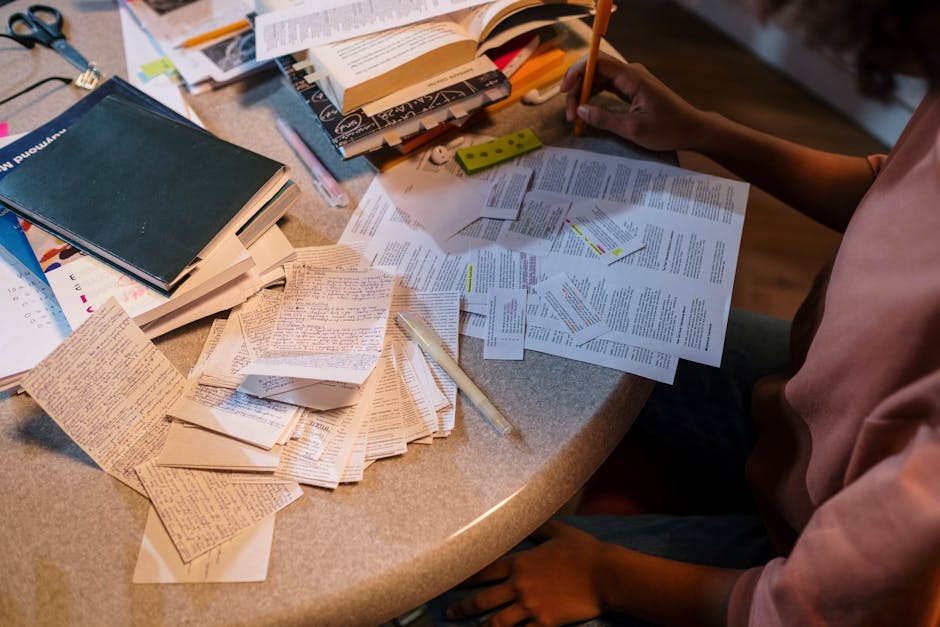
Three conflicting revision plans become one when each subject schedule is rebuilt from the relevant Cambridge syllabus and the approaching exam timetable. The syllabus defines what must be covered; the timetable determines when each subject needs attention.
In 1999, NASA’s Mars Climate Orbiter was approaching Mars when the navigation data behind the mission contained a fundamental conflict. One team had supplied measurements in English units, while another part of the system expected metric units. The spacecraft was lost.
Arthur Stephenson chaired the investigation board that examined the failure. NASA’s Mars Climate Orbiter Mishap Investigation Board Phase I Report documented the mismatch and the weaknesses that allowed it to pass unchecked. Talented teams had plans, calculations and procedures. They lacked one consistently applied standard connecting them.
A family facing three revision plans has a smaller and recoverable version of the same coordination problem. A school plan, a tutor plan and a student’s personal checklist may each contain useful work. Unless they refer back to the same syllabus and exam dates, they can send the student in three directions at once.
Start with the syllabus, not the longest plan
On Sunday evening, lay the three plans beside the syllabus for each subject. Treat the syllabus as the controlling document.
For every proposed revision task, identify the syllabus topic or skill it covers. “Revise electricity” is too broad to schedule well. The syllabus can help separate that instruction into defined areas that can be studied, practised and checked.
Some tasks will appear in all three plans. Combine them. Others may use different wording for the same syllabus content. Merge those too. If a task cannot be connected to the current syllabus, confirm why it is there before giving it precious revision time.
This step also reveals omissions. Three busy-looking plans can all neglect the same topic. A syllabus check makes the missing area visible before the exam does.
Use the syllabus for the student’s exact Cambridge qualification and subject. Cambridge Checkpoint, IGCSE and International A Level require different depth, skills and forms of response. Even familiar knowledge can earn fewer marks when a student has not learned the language and demands of the current curriculum, as explored in A Student’s Familiar Knowledge. New Curriculum Language Puts Marks at Risk.
Let the exam timetable set the order
Once every task has a syllabus home, place the confirmed exam dates on one calendar. Work backwards subject by subject.
The first paper needs enough time for content review, question practice and correction. A later paper may need lighter maintenance now, followed by more concentrated work after the earlier examination. This prevents a distant subject from taking over the week simply because its existing revision plan contains more tasks.
Give priority to three kinds of work:
- Syllabus areas the student has not yet covered securely.
- Topics where recent work shows repeated errors or incomplete explanations.
- Question types that require practice under timed conditions.
Keep the schedule realistic. A plan that fills every available hour leaves no room for schoolwork, fatigue, illness or a topic that takes longer than expected. Shorter, specific sessions are easier to begin and easier for a parent or tutor to review.
For example, replace “Monday: Chemistry revision” with a defined syllabus area, a small set of relevant questions and time to correct the answers. The correction matters. Completing questions without examining the mistakes can preserve the very misunderstanding the session was meant to fix.
Give every task one owner and one status
A single schedule needs a simple way to show what happened. Each task can carry an owner, a planned date and one of four statuses: not started, attempted, needs correction or secure for now.
“Secure for now” is deliberately cautious. It means the student has demonstrated the topic recently, not that the topic can disappear until examination day. Schedule brief returns to previously secure material so recall does not depend on one successful session.
The tutor can use lesson time for diagnosis, explanation and feedback. The student can complete agreed independent practice. The parent can help protect the time, check that the schedule remains manageable and raise conflicts early, without having to become the subject teacher.
Curriculum-specific matching supports this process because the tutor can work from the same Cambridge framework as the school and family. Accelerate Tutors matches students for Cambridge Checkpoint, IGCSE and International A Level support, with live one-to-one online tuition worldwide and in-person tuition available in Ghana. Tutor approval includes checks of qualification, reference and safeguarding evidence.
Run one weekly control check
Return to the schedule once a week. Compare completed work with the syllabus, review errors and adjust the next seven days against the exam timetable.
Do not preserve a task merely because it appeared in the original plan. Move mastered content into shorter review sessions. Give more time to unresolved gaps. If a topic continues to resist independent revision, mark it for tutor attention rather than repeatedly copying it into another evening.
Students moving from Checkpoint into IGCSE may need a more substantial change in method. What Happens When Checkpoint Study Habits Stop Working at IGCSE? explains why familiar habits can become less effective as subject depth and exam demands increase.
NASA’s 1999 loss involved consequences far beyond a family revision calendar, but the mechanism offers a useful warning: separate plans can look competent while working from incompatible references. On the next Sunday evening, open the correct syllabus first, place the exam dates beside it, and let every revision task earn its place.
Comments
No comments yet.