
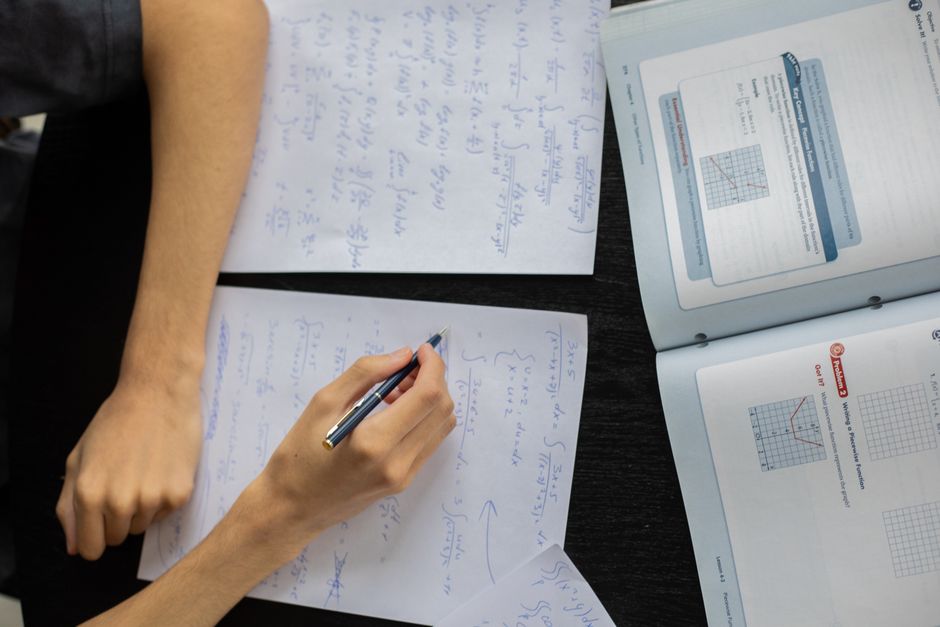
Generic GCSE resources may help with shared subject knowledge, but they cannot reliably prepare a student for a specific Cambridge IGCSE syllabus and assessment route. Parents should check the awarding body, syllabus code, examination series, paper combination, and current syllabus before choosing resources or tutoring.
In 1999, NASA’s Mars Climate Orbiter approached Mars after a journey of roughly nine months. The spacecraft was supposed to enter orbit, but communication was lost as it passed behind the planet. The mission team at NASA’s Jet Propulsion Laboratory in Pasadena faced an unforgiving question: had the orbiter followed the trajectory they thought it had?
It had not.
The measurement mismatch that cost a mission
The investigation chaired by Arthur Stephenson found a mismatch between two systems. Software supplied by one engineering team produced data using English units, while another part of the mission expected metric units. NASA’s Mars Climate Orbiter Mishap Investigation Board Phase I Report documented the error and the failures that allowed it to pass through the mission’s checks.
The orbiter was lost. The underlying calculations were not useless, and the teams were not working without expertise. The problem was alignment. One side supplied information in a form that the other side did not interpret as intended.
A Cambridge IGCSE student can face a quieter version of the same problem. A worksheet labelled “GCSE Mathematics” may contain sound mathematics, but that label alone does not confirm that its topics, terminology, paper format, calculator expectations, or level of difficulty fit the student’s Cambridge IGCSE route.
The consequence is less dramatic than losing a spacecraft, of course. Yet the mechanism matters: accurate work can still miss its destination when the specification on one side does not match the specification on the other.
Where generic GCSE material can drift off course
GCSE and Cambridge IGCSE qualifications can cover substantial common ground. Algebra remains algebra. A well-explained lesson on cell structure or persuasive writing may still be useful. Parents do not need to discard every resource carrying a general GCSE label.
They do need to know what that label leaves unanswered.
“GCSE” can refer to qualifications offered by different awarding bodies, each with its own specification and assessment arrangements. Cambridge IGCSE subjects also have defined syllabuses, syllabus codes, examination series, paper combinations, and published assessment objectives. Even within one subject, students may follow different routes or components.
This affects preparation in practical ways. A student can spend an evening answering questions on content that does not appear in the relevant syllabus. Another may understand the topic but lose marks because the practice did not reflect the required command words, response structure, or mark allocation. A third may rehearse the wrong balance of skills because the resource was designed around another qualification.
The safest question is therefore more precise than “Is this GCSE level?” Ask: “Does this match my child’s current Cambridge IGCSE syllabus and papers?”
Five details parents should verify
Start with the student’s official subject entry information and the current Cambridge syllabus. Then check five details before paying for a resource, course, or tutor:
- Confirm that the awarding body is Cambridge International, rather than relying on the word “international” in a product description.
- Record the exact subject name and syllabus code. Similar subject titles can hide meaningful differences.
- Check the syllabus year or examination series. Resources based on an older syllabus may omit current content or retain material that has changed.
- Identify the student’s component or paper combination, including any relevant practical, coursework, or alternative-to-practical route.
- Compare practice questions with the assessment objectives and specimen or past-paper structure for that syllabus.
A tutor should be able to work from these details. Curriculum-specific matching gives the tutor a clearer starting point: the student’s actual programme, current or predicted grade, goals, availability, and learning support needs. It also makes progress easier for a parent to discuss. Instead of hearing that a child is “doing more science,” the family can ask which syllabus areas need attention and which paper skills are being practised.
For a closer look at turning a syllabus into targeted support, read How Can the IGCSE Syllabus Turn Lost Marks Into a Focused Tutoring Plan?.
Build preparation around the destination
Generic resources work best as supplements. They can provide another explanation, extra questions, or a fresh example when the underlying topic clearly overlaps. They become risky when they set the entire study plan.
A better sequence begins with the destination. Confirm the Cambridge IGCSE syllabus, map the student’s strengths and gaps against it, select the correct paper route, and then choose resources that serve that plan. If the student later moves towards A Level, those decisions can also affect subject readiness; Your Child’s IGCSE Result. Their A Level Choices May Be at Risk. explores that connection.
The Mars Climate Orbiter investigation did not conclude that measurement was unimportant. It showed that every team had to use and verify the same specification. Parents can apply that lesson before the next revision session: place the child’s syllabus code and paper route beside the resource, then confirm that both are guiding the student to the same destination.
Comments
No comments yet.